Without the proper preparation, costly mistakes are bound to happen
Ineffective training methods
Manuals that nobody reads, complex technical sheets that few understand, and learning during live operations only prolong training times.
Accelerated loss of technical knowledge
Every retirement marks the end of decades of expertise. This technical knowledge is neither documented nor properly transferred to your current organization.
Productivity gap
Poor training means training twice. When your operators do not fully grasp the procedures and make repetitive errors, your productivity drops and operational costs climb.
Without the proper preparation, costly mistakes are bound to happen
Ineffective training methods
Manuals that nobody reads, complex technical sheets that few understand, and learning during live operations only prolong training times.
Accelerated loss of technical knowledge
Every retirement marks the end of decades of expertise. This technical knowledge is neither documented nor properly transferred to your current organization.
Productivity gap
Poor training means training twice. When your operators do not fully grasp the procedures and make repetitive errors, your productivity drops and operational costs climb.
What if your operations team could learn with less hesitation and greater certainty?
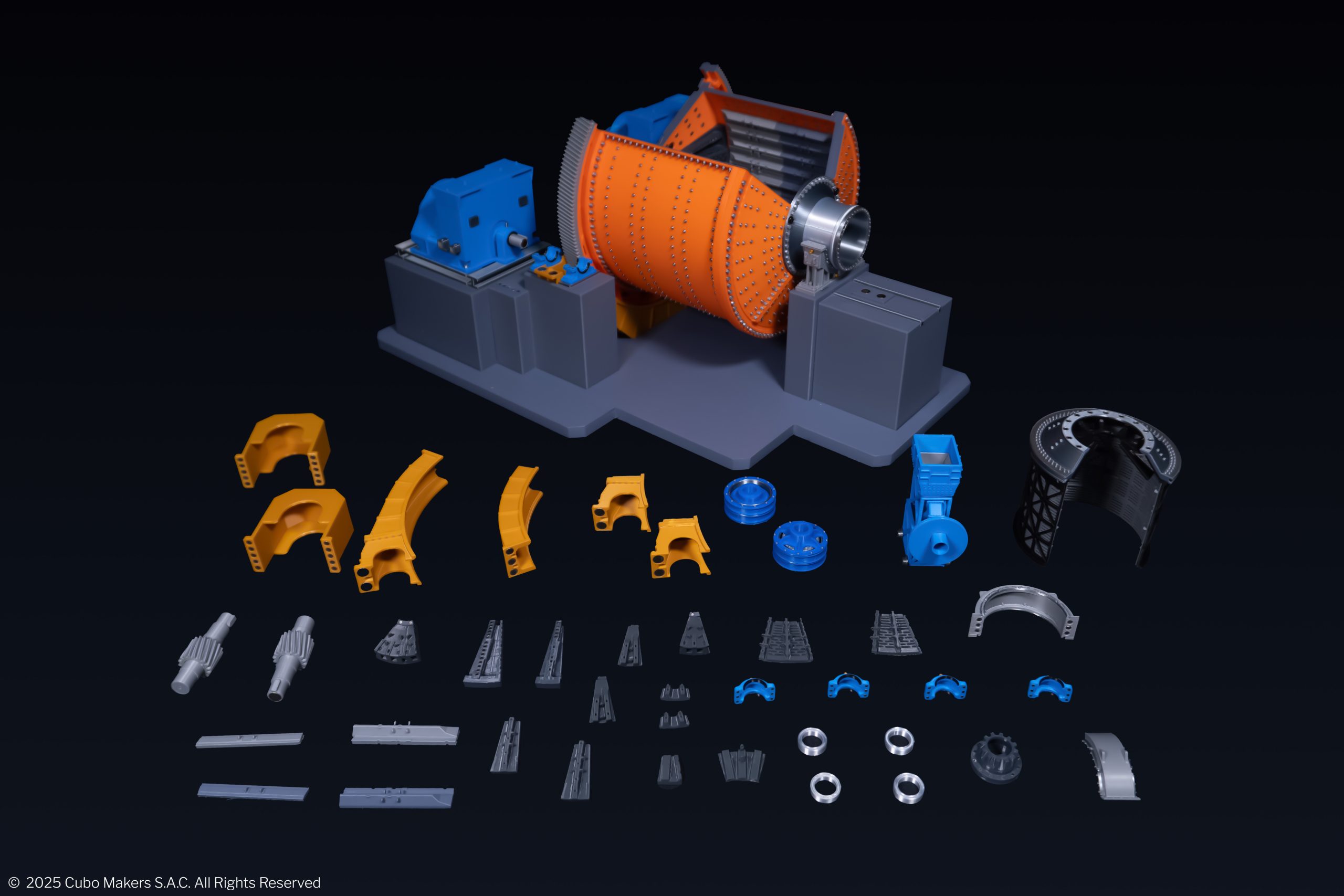
A scale model transforms training into a safe, clear, and precise experience. Your team arrives on-site fully prepared and ready to execute.
Training that works from day one
A scale model captures your operation in its most interactive form. Every procedure materializes directly in your operators’ hands—allowing them to learn without interpreting, guessing, or hesitating.
How scale models deliver results
Knowledge transfer
Accelerate technical knowledge transfer through a clear and precise learning experience.
Standardization of critical tasks
Define procedures and let your team practice them until they are fully internalized, ensuring consistent execution regardless of the operator.
Reduced operational time
When your team is trained on the model, they will execute real-world tasks with greater efficiency.
Optimization of productivity metrics
Training models help reduce errors, shorten intervention times, and consequently, increase overall productivity.
Real-world applications
Training operators before scheduled maintenance
Prepare work teams for critical interventions by simulating the exact sequences of scheduled maintenance.
Result
47% reduction in human errors during operational practices. (*)
Safety and emergency protocol training
Train responses to high-risk scenarios without real-world exposure. Your operators practice how to react to critical contingencies—including leaks, emergency shutdowns, and evacuations.
Result
63% reduction in incidents, accidents, and near-misses during training. (*)
Standardization of critical procedures across shifts and contractors
Ensure that everyone, regardless of shift or experience, executes identical procedures. The scale model serves as a single visual reference point that eliminates subjective interpretations.
Result
71% reduction in procedural variations between shifts. (*)
Onboarding and training new personnel
Accelerate the onboarding of new hires by allowing them to grasp the entire operation before going on-site, significantly reducing their reliance on mentors.
Result
55% increase in technical knowledge transfer for new operators. (*)
(*) The indicators presented are referential approximations based on operational experiences and real-world cases. Results may vary depending on the context, scope, and implementation conditions of each operation.
Our featured projects
Gyratory Crusher 1:24
FLS
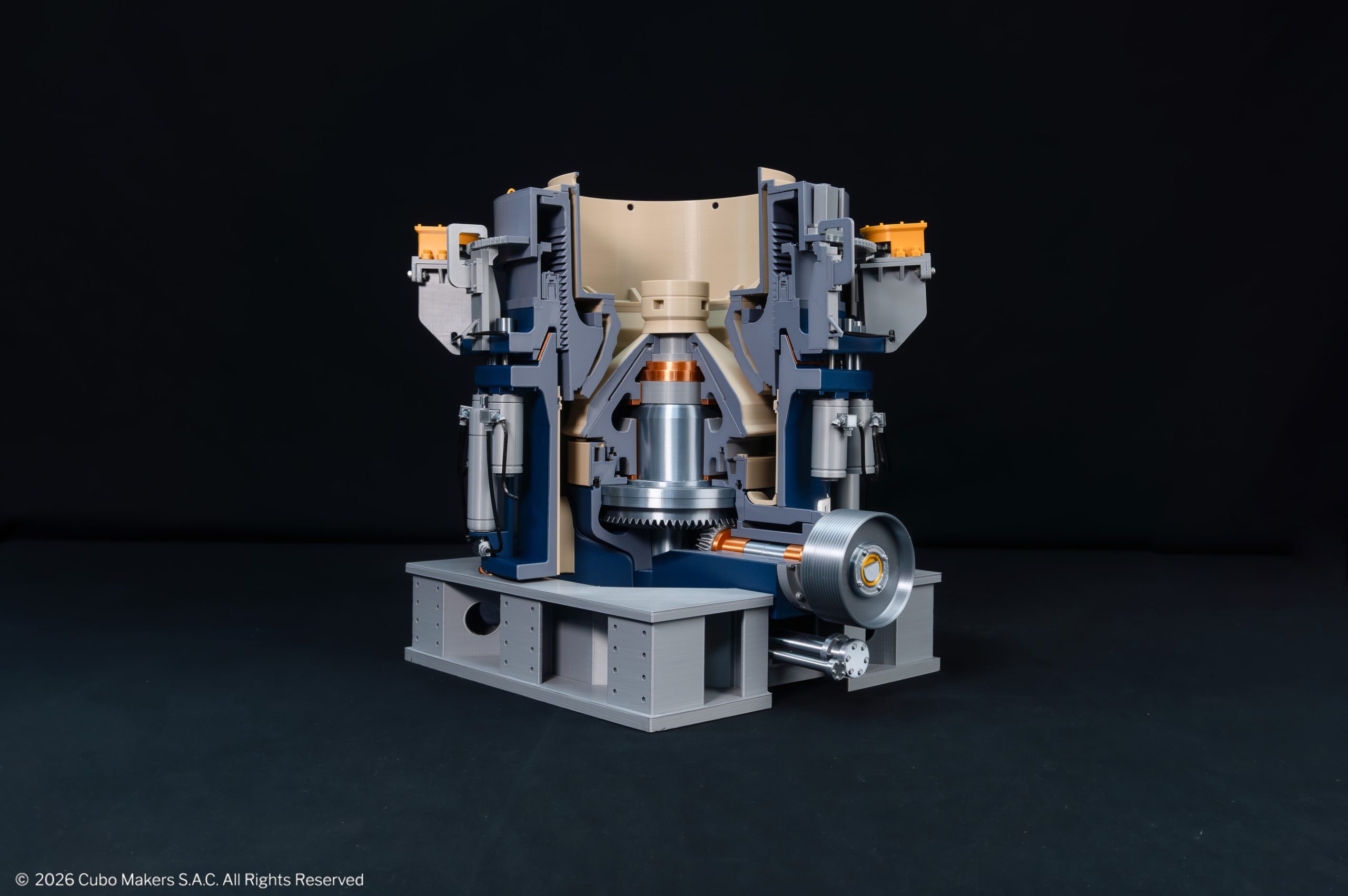
Cone Crusher Raptor 1:15
FLS
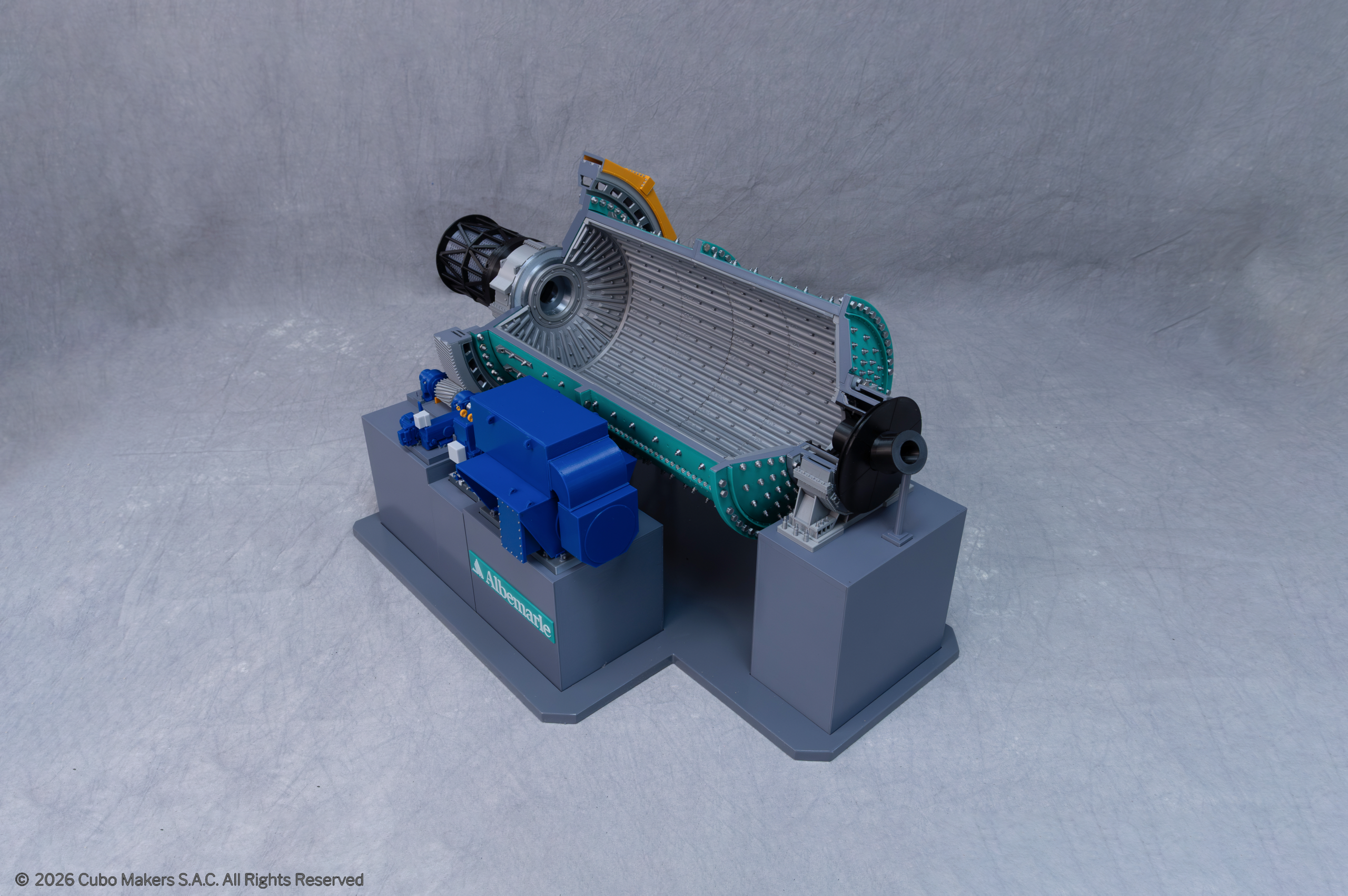
Ball Mill 1:40
ALBEMARLE
SAG Mill Dual Pinion 1:56
Metso
Trusted by Leaders
After-sales support with a 1-year warranty
Comprehensive advisory from the start
Customization based on your needs
After-sales support with a 1-year warranty
Comprehensive advisory from the start
Customization based on your needs
The training method that delivers the greatest results
Let’s talk and evaluate together if this tool is the perfect fit for you
Para ofrecer las mejores experiencias, utilizamos tecnologías como las cookies para almacenar y/o acceder a la información del dispositivo. El consentimiento de estas tecnologías nos permitirá procesar datos como el comportamiento de navegación o las identificaciones únicas en este sitio. No consentir o retirar el consentimiento, puede afectar negativamente a ciertas características y funciones.
Funcional
Always active
El almacenamiento o acceso técnico es estrictamente necesario para el propósito legítimo de permitir el uso de un servicio específico explícitamente solicitado por el abonado o usuario, o con el único propósito de llevar a cabo la transmisión de una comunicación a través de una red de comunicaciones electrónicas.
Preferencias
El almacenamiento o acceso técnico es necesario para la finalidad legítima de almacenar preferencias no solicitadas por el abonado o usuario.
Estadísticas
El almacenamiento o acceso técnico que es utilizado exclusivamente con fines estadísticos.El almacenamiento o acceso técnico que se utiliza exclusivamente con fines estadísticos anónimos. Sin un requerimiento, el cumplimiento voluntario por parte de tu proveedor de servicios de Internet, o los registros adicionales de un tercero, la información almacenada o recuperada sólo para este propósito no se puede utilizar para identificarte.
Marketing
El almacenamiento o acceso técnico es necesario para crear perfiles de usuario para enviar publicidad, o para rastrear al usuario en una web o en varias web con fines de marketing similares.